
Aging in place means staying in your own home safely and independently as you age or as mobility changes. Most falls happen at home. The U.S. Department of Veterans Affairs notes that falls are a leading cause of fractures, injuries, loss of function and deaths among older adults, and that about half of all falls happen at home.
This checklist walks you through your home room by room so you can find hazards and fix them. Walk through it with a family member or friend. Fix immediate dangers first, such as a loose stair railing or poor lighting, then work through the rest. The National Institute on Aging notes that it may not be necessary to make every change on a list like this, and that home safety should be checked again every so often as needs change. This guide is general information, not medical advice. If you have fallen, or you are worried about falling, talk with your doctor. Your doctor may suggest that an occupational therapist, physical therapist or nurse visit your home to assess its safety.
A note on measurements
The 2010 ADA Standards for Accessible Design set rules for places of public accommodation and government facilities, not for a private home. The measurements in this checklist come from those Standards and are used here as a reference for sizing grab bars, toilets, showers and sinks. They are not legal requirements for your home. Where no official source states a figure, this checklist describes the check without inventing a number.
Start with these five
These are the fixes the National Institute on Aging and the CDC put first. Do them before anything else.
1. Bathroom
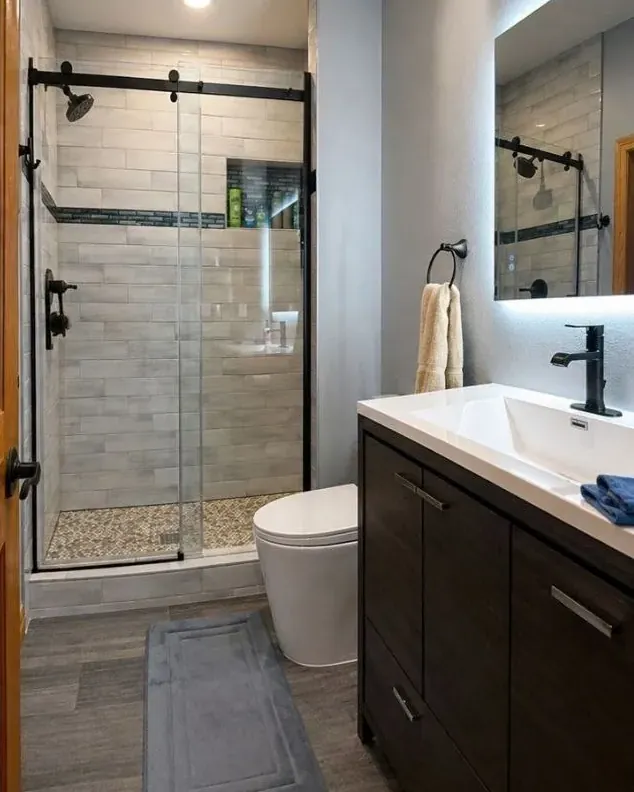
The bathroom is where the most serious falls at home happen, because it combines hard, wet surfaces with sitting down and standing up. Start here if you only fix one room.
Section sources: CDC Check for Safety; National Institute on Aging, Preventing Falls at Home: Room by Room, and Worksheet: Home Safety Checklist; U.S. Department of Veterans Affairs, Be Safe: Prevent Falls; 2010 ADA Standards for Accessible Design, sections 603, 604, 606, 608 and 609.
2. Kitchen
Section sources: CDC Check for Safety; National Institute on Aging, Preventing Falls at Home: Room by Room, and Worksheet: Home Safety Checklist; AARP HomeFit Guide.
3. Bedroom
Section sources: CDC Check for Safety; National Institute on Aging, Preventing Falls at Home: Room by Room.
4. Stairs and hallways
Section sources: CDC Check for Safety; National Institute on Aging, Preventing Falls at Home: Room by Room, and Worksheet: Home Safety Checklist; U.S. Department of Veterans Affairs, Be Safe: Prevent Falls.
5. Entryways and outdoors
Section sources: CDC Check for Safety; National Institute on Aging, Preventing Falls at Home: Room by Room, and Worksheet: Home Safety Checklist; AARP HomeFit Guide.
6. Lighting throughout the home
Section sources: CDC Check for Safety; National Institute on Aging, Preventing Falls at Home: Room by Room; U.S. Department of Veterans Affairs, Be Safe: Prevent Falls; AARP HomeFit Guide.
7. Floors and living areas
Section sources: CDC Check for Safety; National Institute on Aging, Preventing Falls at Home: Room by Room, and Worksheet: Home Safety Checklist; U.S. Department of Veterans Affairs, Be Safe: Prevent Falls.
8. Fire safety and alarms
Section sources: U.S. Fire Administration, Smoke Alarms; National Institute on Aging, Worksheet: Home Safety Checklist.
9. Getting help and staying connected
Section sources: National Institute on Aging, Preventing Falls at Home: Room by Room, and Worksheet: Home Safety Checklist; Florida Department of Elder Affairs, Elder Helpline.
What to do next
Start with the five fixes at the top of this checklist. They cost little and cover the most common hazards. Then work through the rooms one at a time, beginning with the bathroom.
If a fix needs a contractor, Genesis Home Design LLC offers a free in-home design consultation. We will walk through your home with you, go over this checklist together, and provide a written quote for the work. We build the changes in this checklist: grab bars, walk-in and curbless showers, stair lifts, ramps, widened doorways, lowered counters and sinks, lever handles and better lighting.
If you need help paying for the work, read our guide to ways to pay for aging-in-place remodeling at genesishomedesignfl.com/ways-to-pay. It covers VA grants for veterans, Florida and county programs, and other options. It does not repeat the program details here. Confirm eligibility and current terms with the agency listed before you rely on any program.
Sources
- CDC, STEADI (Stopping Elderly Accidents, Deaths and Injuries), Check for Safety: A Home Fall Prevention Checklist for Older Adults. https://www.cdc.gov/steadi/pdf/STEADI-Brochure-CheckForSafety-508.pdf
- National Institute on Aging, Preventing Falls at Home: Room by Room. https://www.nia.nih.gov/health/falls-and-falls-prevention/preventing-falls-home-room-room
- National Institute on Aging, Worksheet: Home Safety Checklist. https://www.nia.nih.gov/sites/default/files/2023-04/worksheet-home-safety-checklist_1.pdf
- U.S. Department of Veterans Affairs, National Center for Health Promotion and Disease Prevention, Be Safe: Prevent Falls. https://www.prevention.va.gov/PREVENTION/Healthy_Living/Be_Safe_Prevent_Falls.asp
- AARP HomeFit Guide, 2025 edition. https://www.aarp.org/content/dam/aarp/livable-communities/housing/2020/homefit/AARP%20HomeFit%20Guide-Singles-05222025.pdf
- 2010 ADA Standards for Accessible Design, sections 603, 604, 606 and 608. Section text read at the U.S. Access Board, Chapter 6: Plumbing Elements and Facilities. https://www.access-board.gov/aba/chapter/ch06/
- 2010 ADA Standards for Accessible Design, section 609 (grab bars). Figures confirmed in U.S. Department of Justice settlement agreements quoting the Standards. https://archive.ada.gov/sierra-vista/sierra_vista_attj.htm and https://Archive.ada.gov/sd_attb.html
- U.S. Fire Administration, Smoke Alarms. https://www.usfa.fema.gov/prevention/home-fires/prepare-for-fire/smoke-alarms/
- Florida Department of Elder Affairs, Elder Helpline, 1-800-963-5337. https://elderaffairs.org/contact-us/
- Eldercare Locator, U.S. Administration for Community Living, 1-800-677-1116.
What we could not verify
- No home safety checklist published by the Florida Department of Elder Affairs was found. The draft uses the Department's Elder Helpline only as a local contact, and does not claim the Department publishes a checklist.
- No Florida Building Code accessibility provision was verified from an official source for this draft. The draft states no Florida Building Code figures. The Code adopts accessibility provisions, but the specific sections were not confirmed here.
- The AARP HomeFit Guide does not cover stair lifts. The draft mentions a stair lift only as a Genesis service option in the stairs section, not as a recommendation from an official source.
- The CDC figure that 1 in 4 older adults fall each year was not verified from a CDC page read for this draft, so it is not used. The draft uses the VA statement that about half of all falls happen at home instead.
- Winter items in the national guides, such as treating icy walkways with ice melt or sand, do not apply in South Florida and were left out.
- Whether a specific smoke alarm placement rule applies to a given home under local code was not verified. The draft uses U.S. Fire Administration guidance, and the Administration notes that a city, county or state may require a specific type of alarm.
- The ADA Standards do not apply to private homes. All ADA figures in this draft are reference dimensions only, and a home does not have to meet them.
- The AARP HomeFit Guide asks in its self-check whether interior doorways are at least 36 inches wide. The draft uses the 32 inch clear width figure from the Guide's entrances section instead, because that is the figure the Guide gives with its explanation. The 36 inch self-check question was not used.