
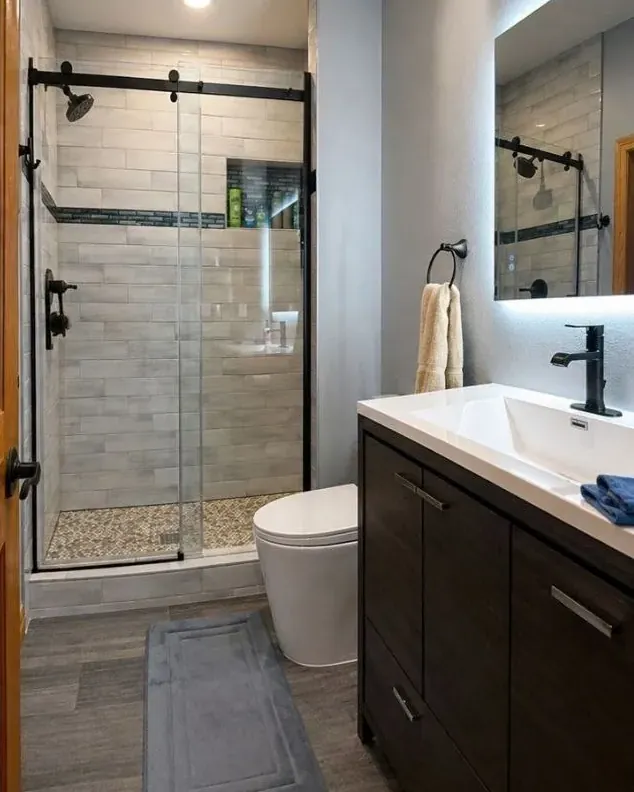
Aging-in-place remodeling means changing a home so a person can keep living in it safely and independently as they age or as mobility changes. Typical work includes walk-in showers, grab bars, ramps, stair lifts, widened doorways, lowered counters and sinks, lever handles and better lighting.
This guide lists the main ways to pay for that work in South Florida. Programs change their rules, amounts and application windows often. Confirm eligibility and current terms with the agency listed before you rely on any program. This guide is general information, not legal or financial advice.
First, what Medicare does not pay for
Original Medicare does not pay for home modifications such as ramps, walk-in showers or grab bars. Under Medicare rules, items like bathtub lifts and bathtub seats are denied as comfort or convenience items, not primarily medical in nature.
Some Medicare Advantage plans may offer limited supplemental benefits, such as stair rails, grab bars or temporary mobility ramps. That depends on the plan. If you have a Medicare Advantage plan, call the number on your plan card and ask what home safety benefits it includes.
Source: U.S. Centers for Medicare and Medicaid Services, Durable Medical Equipment Reference List, and CMS guidance on Medicare Advantage supplemental benefits.
1. For veterans: the VA HISA grant
The VA Home Improvements and Structural Alterations (HISA) grant helps pay for medically necessary changes to a veteran's primary home. It is available to veterans with service-connected disabilities and, in some cases, to veterans with non-service-connected disabilities who are enrolled in VA health care.
What it can pay for
- Getting in and out of the home, including permanent ramps
- Using essential bathroom and kitchen facilities, such as roll-in showers
- Reaching kitchen and bathroom sinks and counters, such as lowering them
- Handrails, lowered electrical outlets and switches
- Improving paths or driveways in the immediate area of the home
- Plumbing or electrical work needed for home medical equipment, such as dialysis
Amounts
HISA is a lifetime benefit. The amounts below are from VA pages checked November 27, 2026, and are subject to change:
- Up to $6,800 for a service-connected condition, or for a non-service-connected condition of a veteran rated 50 percent or more service-connected.
- Up to $2,000 for all other veterans registered in the VA health care system.
What it will not pay for
HISA will not pay for walkways to exterior buildings, widening a driveway beyond a 7 ft by 6 ft area, a spa, hot tub or Jacuzzi, exterior decking beyond an 8 ft by 8 ft area, home security systems, portable ramps, porch lifts, stair glides, or routine home maintenance such as roof or air conditioner replacement.
Note this carefully: a stair lift, also called a stair glide, is not covered by HISA. If a stair lift is the main need, ask about the other programs in this guide instead.
How to apply
- Get a prescription from a VA or fee-basis physician. It must list the specific items needed, the diagnosis and the medical reason for the change, plus the veteran's name, address and phone number.
- Complete VA Form 10-0103, Veterans Application for Assistance in Acquiring Home Improvement and Structural Alterations.
- Provide a written itemized estimate of costs for labor, materials, permits and inspections. VA guidance in its HISA fact sheet asks for quotes from at least three contractors. Genesis can provide one written itemized estimate for the work.
- Provide a color photograph of the area before the work is done.
- If the home is rented or leased, provide written permission from the owner.
A veteran may receive a HISA grant and also a Special Home Adaptation (SHA) grant or a Specially Adapted Housing (SAH) grant. Start by talking with your VA primary care provider or your local VA Prosthetic and Sensory Aids Service.
Sources: U.S. Department of Veterans Affairs, Home Improvements and Structural Alterations Program fact sheet; VA Fayetteville Coastal Health Care, HISA program page.
2. For veterans with severe service-connected disabilities: SAH and SHA grants
Veterans with certain permanent and total service-connected disabilities may qualify for larger VA housing grants to buy, build or modify an adapted home. These are separate from HISA and can be used together with it.
- Specially Adapted Housing (SAH) grant: up to $133,042 for fiscal year 2027.
- Special Housing Adaptation (SHA) grant: up to $26,654 for fiscal year 2027.
- Temporary Residence Adaptation (TRA) grant: up to $53,585 for veterans who qualify for SAH, and up to $9,568 for veterans who qualify for SHA, for fiscal year 2027.
Amounts are set by law and adjusted each year for construction costs. Apply with VA Form 26-4555, online through VA.gov or at a VA Regional Loan Center. Ask a VA SAH agent or your County Veterans Services Officer for help with the application.
Source: U.S. Department of Veterans Affairs, Disability housing grants for Veterans.
3. Florida Medicaid Long-Term Care
Florida's Statewide Medicaid Managed Care Long-Term Care program, called SMMC LTC, provides home and community-based services to Medicaid recipients who need nursing home level care but want to stay at home. The program runs under a federal Home and Community-Based Services waiver administered by the Florida Agency for Health Care Administration (AHCA).
Home accessibility adaptations can be part of a person's care plan under this program. What is covered, and how much, is decided case by case through the care plan and the person's Medicaid managed care plan, so ask your plan case manager what is included for you.
To be screened, call your local Aging and Disability Resource Center through the Elder Helpline at 1-800-963-5337. To apply for Medicaid in Florida, use the Department of Children and Families ACCESS system.
Sources: Florida Agency for Health Care Administration, Application for a 1915(c) Home and Community-Based Services Waiver, Florida Long-Term Care (renewal draft, proposed effective April 1, 2027); Florida Department of Elder Affairs.
4. Florida state programs that are not Medicaid
Community Care for the Elderly (CCE)
CCE is a state-funded program run by the Florida Department of Elder Affairs. It provides community-based services to help functionally impaired elders live in their own homes as long as possible. Services can include emergency home repair and housing improvement.
To qualify, a person must be age 60 or older and functionally impaired, as determined by an assessment. Priority is given to elders referred by Adult Protective Services. Funding is limited, and clients may pay a co-payment on a sliding scale.
To apply, contact your local Aging and Disability Resource Center or call the Elder Helpline at 1-800-963-5337.
Source: Florida Department of Elder Affairs, Community Care for the Elderly (CCE) Program.
Home Care for the Elderly (HCE)
HCE is a state-funded program that provides a monthly subsidy to caregivers to help them keep a low-income elder in the elder's own home or in the caregiver's home. The subsidy is for support and health maintenance, including food, housing, clothing and medical care, and it can help with the cost of home modifications and supplies. Ask your local Aging and Disability Resource Center what the current subsidy is and whether you qualify.
Source: Florida Department of Elder Affairs, Bureau of Community and Support Services.
5. County programs in Broward, Miami-Dade and Palm Beach
Most county housing help is income limited, application based and funding limited. Qualifying does not guarantee that money is available. Check the county page or call the county office for current terms before you plan around a program.
Miami-Dade County: Older Adults Home Modification Program
The Older Adults Home Modification grant program offers free, high-impact, minor non-structural home modifications to qualifying older adults. Typical work includes grab bars, ramps, improved lighting, non-slip flooring, handrails and level-style door handles.
To qualify, the homeowner must be age 62 or older, agree to a visit by an occupational therapist, show a need for the modifications, and meet the income limits. Applications for fiscal year 2025-2026 are closed. The waitlist for fiscal year 2026-2027 is open, and participants are selected through a random lottery. Call 786-469-4856 to be enrolled in the drawing.
Source: Miami-Dade County, Older Adults Home Modification grant program.
Broward County: Special Needs / Barrier Free Home Rehabilitation
Broward County's homeowner programs include housing modifications and barrier removal for qualifying owner-occupants with a household member who has a special need or disabling condition. The county was accepting Special Needs / Barrier Free home rehabilitation pre-applications countywide. Income, property, mortgage, tax, funding and program rules apply, and assistance is not an unrestricted cash grant.
Check the county homeowner programs page for current availability, terms and how to apply.
Source: Broward County, Homeowner programs.
Palm Beach County: SHIP Owner Occupied Housing Rehabilitation
Palm Beach County's Department of Housing and Economic Development runs an Owner Occupied Housing Rehabilitation program funded through the State Housing Initiatives Partnership (SHIP). It provides up to $100,000 to extremely low, very low and low income eligible owner-occupants to correct code violations, make hurricane hardening improvements, repair roofing, electrical and plumbing, and remove conditions that threaten life, health or safety. Past rounds of this program have also adapted homes to meet accessibility requirements.
The most recent application portal opened November 9, 2026 and closed November 27, 2026, with 50 applications to be selected by random selection. Check the county housing page for the next round.
Source: Palm Beach County Department of Housing and Economic Development, State Housing Initiatives Partnership (SHIP) Owner Occupied Housing Rehabilitation Program.
What SHIP is
SHIP, the State Housing Initiatives Partnership, is the state funding behind county housing rehabilitation programs in Florida. Counties and cities run their own SHIP programs with their own rules, income limits and application windows, so always check the program in your own county.
6. USDA Single Family Housing Repair Loans and Grants (Section 504)
This federal program, run by the U.S. Department of Agriculture, provides loans to low and very-low-income homeowners to repair, improve or modernize their homes, and grants to elderly very-low-income homeowners to remove health and safety hazards or make a home accessible for a household member with a disability.
- Maximum loan: $40,000, at a fixed interest rate of 1 percent, repaid over 20 years.
- Maximum grant: $10,000, with a lifetime limit of $10,000. Grants must be repaid if the property is sold in less than three years.
- Loans and grants can be combined for up to $50,000 in assistance.
To qualify, you must own and occupy the home, be unable to obtain affordable credit elsewhere, and have a household income within the low or very-low limit for your county. For grants, you must be age 62 or older and within the very-low income limit.
One important limit: the property must be in an eligible rural area. Much of Broward, Miami-Dade and Palm Beach counties is not rural, so check your address on the USDA eligibility site before you apply. Applications are accepted through your local Rural Development office year round.
Source: U.S. Department of Agriculture, Rural Development, Single Family Housing Repair Loans and Grants.
7. Paying for the work yourself
If no program covers the work, these are the usual ways homeowners pay:
- Savings. Paying from savings avoids interest and keeps the project simple. Some homeowners split the work into stages, starting with the highest-risk items such as the shower and the stairs, and doing the rest later.
- Home equity. A home equity loan or home equity line of credit lets you borrow against the value of your home. Terms, rates and fees vary by lender, and your home is the collateral. Talk to your bank or lender about the terms before you sign anything.
- Genesis financing. Flexible financing available — ask us.
- Genesis $1,500 credit. Credit applies to signed contracts of $20,000 or more when the consultation was booked online and the contract is signed within 3 calendar days of the consultation. Limit 3 per month. Cannot be combined with other offers.
How to get started
Book a free in-home design consultation and we will look at your home, talk through what you need, and give you a written quote for the work. A written itemized estimate is also what programs like the VA HISA grant ask for, so the consultation can be the first step toward an application.
Genesis Home Design LLC, Florida Certified General Contractor, Lic. #CGC1542493
Based in Hallandale Beach, FL. Serving Broward, Miami-Dade and Palm Beach counties.
Phone: (754) 714-5024
Email: admin@genesishomedesignfl.com
Hours: Monday to Friday, 8:00 AM to 5:00 PM
Sources
- U.S. Department of Veterans Affairs, Home Improvements and Structural Alterations Program fact sheet: http://www.prosthetics.va.gov/PROSTHETICS/Docs/HISA_NEW.pdf
- U.S. Department of Veterans Affairs, Fayetteville Coastal Health Care, Home Improvements / Structural Alterations (HISA): https://www.va.gov/fayetteville-coastal-health-care/programs/home-improvementsstructural-alterations-hisa/
- U.S. Department of Veterans Affairs, Disability housing grants for Veterans (SAH and SHA): https://www.va.gov/housing-assistance/disability-housing-grants/
- Florida Agency for Health Care Administration, Application for a 1915(c) Home and Community-Based Services Waiver, Florida Long-Term Care: https://ahca.myflorida.com/file/medicaid/LTC_1915(c)_Waiver_2027_Renewal_Draft_Final.PDF
- Florida Department of Elder Affairs, Community Care for the Elderly (CCE) Program: https://elderaffairs.org/programs-and-services/community-care-for-the-elderly-cce-program/
- Florida Department of Elder Affairs, Bureau of Community and Support Services (Home Care for the Elderly): https://elderaffairs.org/about-us/bureau-of-community-and-support-services/
- Miami-Dade County, Older Adults Home Modification grant program: https://www.miamidade.gov/global/service.page?Mduid_service=ser1763389493663278
- Broward County, Homeowner programs: https://www.broward.org/Housing/Pages/Homeowner.aspx
- Palm Beach County Department of Housing and Economic Development, SHIP Owner Occupied Housing Rehabilitation Program: https://discover.pbc.gov:443/HED/Pages/SHIP.aspx
- U.S. Department of Agriculture, Rural Development, Single Family Housing Repair Loans and Grants: https://www.rd.usda.gov/programs-services/single-family-housing-programs/single-family-housing-repair-loans-grants
- U.S. Centers for Medicare and Medicaid Services, Durable Medical Equipment Reference List: https://www.cms.gov/medicare-coverage-database/view/ncd.aspx?ncdid=190&ncdver=1&keyword=lift&keywordType=starts&areaId=all&docType=NCA%2CCAL%2CNCD%2CMEDCAC%2CTA%2CMCD%2C6%2C3%2C5%2C1%2CF%2CP&contractOption=all&sortBy=relevance&bc=1
What we could not verify
- Enhanced Home Care for the Elderly (eHCE). A 2023 newsletter from a Department of Elder Affairs partner described up to $6,000 for home modifications and other enhancements for qualifying seniors. We could not confirm this program on an official Department of Elder Affairs page in this research round. Ask your local Aging and Disability Resource Center whether it is running in your county.
- Dollar caps for home accessibility adaptations under Florida SMMC LTC. Coverage is set through the individual care plan with the person's Medicaid managed care plan. No published dollar cap was found in official sources.
- The Home Care for the Elderly monthly subsidy amount. Third-party sites cite a basic subsidy figure, but we could not confirm an amount on an official Department of Elder Affairs page. The amount should be confirmed with the local Aging and Disability Resource Center.
- Whether SMMC LTC covers stair lifts. A third-party funding guide says the program covers stair lifts as environmental modifications. We could not confirm this from an official AHCA or Medicaid source. Ask your plan case manager.
- Fort Lauderdale SHIP Housing Rehabilitation Program. A third-party site reports up to $85,000 as a deferred, interest-free loan for major repairs including accessibility improvements. We did not check the City of Fort Lauderdale program page directly in this research round.
- Current maximum assistance and loan terms for Broward County's Special Needs / Barrier Free program. The county page confirms the program exists and was accepting pre-applications. The current maximum, and whether assistance is a forgivable loan, were not confirmed from the county page.
- Palm Beach County SHIP next application round. The round announced for November 9 to November 27, 2026 has closed. Dates for the next round were not available.
- HISA grant amounts. The $6,800 and $2,000 figures are from VA pages checked November 27, 2026. The VA itself notes that amounts are subject to change.
- USDA rural eligibility for specific addresses. Most of Broward, Miami-Dade and Palm Beach counties is not a USDA eligible rural area. Each address must be checked on the USDA eligibility site.
- SAH and SHA grant amounts. The $133,042 and $26,654 figures are the fiscal year 2027 maximums published by the VA. They are adjusted each year for construction costs.